The Science Behind Under Eye Wrinkles: Why The Eye Area Ages First

For many women, the first visible signs of skin aging do not appear across the entire face. They begin around the eyes.
A faint line forms at the outer corner when you smile. The skin beneath the eyes may appear thinner. Shadows or swelling develop that make the face look more tired than you actually feel. Concerns such as under eye wrinkles, under eye puffiness, and thin skin under eyes often appear earlier than other visible changes.
This experience is remarkably common. You may feel energized, confident, and fully present in your life, yet the eye area can reflect fatigue that does not match how you truly feel. The explanation lies not in accelerated aging, but in biology. The skin surrounding the eyes is structurally different and constantly active, which makes it more vulnerable to visible change.
What Is Happening Beneath The Surface
The eye contour is one of the most dynamic areas of the face. Humans blink thousands of times every day while also squinting, smiling, and focusing on screens. These repeated movements create constant mechanical stress on delicate periocular skin. At the same time, the structure of this skin is fundamentally different from the rest of the face. Dermatological studies show that eyelid skin is the thinnest skin on the body, with minimal subcutaneous fat and reduced structural support.
Because the skin under the eyes is thinner and contains fewer oil glands, it retains less moisture and has less natural cushioning. This makes early changes such as under eye wrinkles, under eye puffiness, and visible thin skin under eyes more noticeable. Beneath the surface, collagen and elastin also gradually decline with age. These proteins form the supportive framework of the dermis and help skin maintain firmness and elasticity. As collagen production slows, the skin becomes less resilient and expression lines become more visible.
Circulation also plays an important role. Reduced microcirculation in the delicate tissues around the eyes can contribute to fluid accumulation and pigmentation changes, which often appear as puffiness or dark circles. These biological shifts explain why many people search for solutions such as how to tighten skin under eyes or how to reduce under eye wrinkles.
Why Targeted Support Matters For The Eye Area
Because the eye contour is structurally unique, it benefits from targeted care rather than generalized skincare. Traditional creams designed for the entire face often focus on surface hydration but may not address deeper biological mechanisms involved in skin aging. In recent years, dermatology research has increasingly explored technologies that support skin renewal at the cellular level.
One of the most studied approaches is red light therapy, also known as photobiomodulation. This technology uses specific wavelengths of light that penetrate the skin and interact with mitochondria, the structures responsible for cellular energy production. Research shows that red light wavelengths between roughly 600–700 nm can penetrate skin tissue and stimulate cellular activity, supporting collagen synthesis and tissue repair.
When LED therapy is delivered through devices designed specifically for the eye contour, the treatment can target the precise area where early signs of aging appear. Clinical evaluations of periocular tissues show that aging around the eyes is associated with loss of elasticity and structural changes in the eyelid region. With consistent use, targeted LED therapy can help support:
-
smoother skin texture
-
improved firmness and elasticity
-
reduction in visible under eye wrinkles
-
improvement in the appearance of under eye puffiness
Importantly, skin renewal occurs gradually. Meaningful improvements often result from consistent support rather than aggressive short-term treatments.
What Does Research Say?
Clinical research continues to explore how light-based therapies can support skin health.
Studies investigating LED photobiomodulation have found that red light therapy may stimulate fibroblast activity and collagen metabolism, both of which are essential for maintaining skin structure. Additional clinical studies examining facial photobiomodulation treatments in adults have reported improvements in skin firmness and visible signs of aging after multiple treatment sessions.
These findings suggest that consistent exposure to therapeutic light wavelengths may support skin rejuvenation by encouraging natural biological processes such as collagen synthesis and cellular repair. While results vary depending on device design and treatment consistency, the evidence supporting photobiomodulation continues to expand in dermatology research.
Why Metamorphosis Focuses On Precision Eye Care
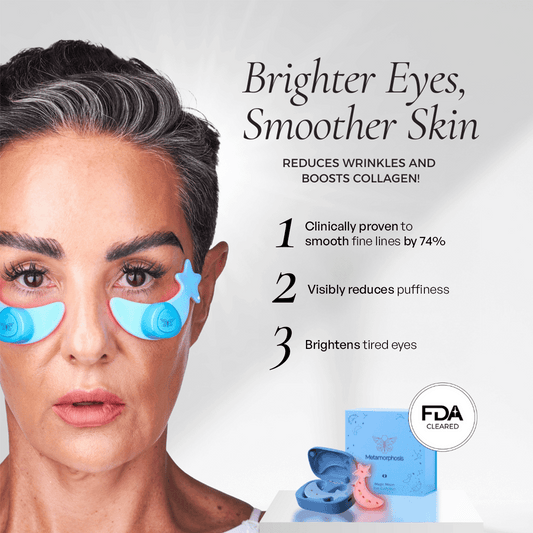
Because the eye area requires precision, Metamorphosis develops devices designed specifically for targeted treatments. MagicMoon Eye Evolution was created to support the delicate under-eye contour through multi-wavelength LED therapy. By delivering controlled light energy directly to the eye area, the device helps support collagen production and improve the appearance of fine lines and texture. This type of targeted treatment allows users to address common concerns such as under eye wrinkles, under eye puffiness, and thin skin under eyes with a gentle, non-invasive approach.

Professional-grade LED skincare technology is now more accessible than ever. Consumers can now explore options such as Ulta red light therapy devices through trusted retailers, including the Ulta Beauty online store. The goal is not aggressive intervention. Instead, it is consistent support that helps the skin maintain its natural structure over time.
FAQ
Is red light therapy safe for the eye area?
Red light therapy is considered a non-invasive treatment when used according to device guidelines. Many dermatology studies report minimal side effects and good tolerability when the technology is properly designed.
How often should you use LED therapy for the eye area?
Most LED devices are designed for consistent daily or weekly use. Regular use supports the skin’s natural regenerative processes and helps improve visible signs of aging over time.
How long does it take to see results?
Skin renewal occurs gradually. Many clinical studies evaluating LED therapy measure visible improvements after several weeks of consistent treatment.
Renewal Begins With The Eyes
Because the eyes frame every expression, even subtle improvements can influence the entire face. When the under-eye contour appears smoother, brighter, and more supported, the complexion often looks more refreshed and vibrant. And because the eye area is often the first place where change appears, it is also the first place where renewal can be seen.
Explore how targeted LED therapy can support healthier, more resilient skin and become part of a consistent daily skincare ritual.