LED Pimple Patches vs. Regular Pimple Patches: What's Actually the Difference?
Not all pimple patches work the same way. Regular hydrogel patches sit on the surface. LED pimple patches work at the cellular level — targeting acne-causing bacteria, reducing inflammation, and...

LED Pimple Patches vs. Regular Pimple Patches: What's Actually the Difference?
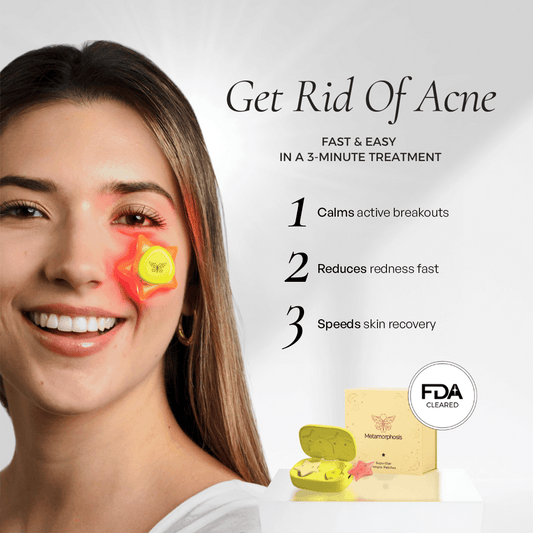
The direct answer: Regular pimple patches work by absorbing fluid and creating a moist healing environment on the skin's surface. LED pimple patches work differently — they deliver clinically studied wavelengths of light directly into the skin to target acne-causing bacteria, reduce inflammatory signaling, and support cellular repair at the source of the breakout. The SuperStar Pimple Patches by Metamorphosis Light Therapy are FDA 510(k)-cleared and combine 630nm red light and 415nm blue light in a targeted, wearable device — representing a fundamentally different category of acne treatment than anything you'll find at the drugstore.
What Regular Pimple Patches Actually Do
Regular pimple patches — the kind sold in bulk on Amazon and at every checkout counter — are typically made from hydrocolloid, a gel-forming material originally developed for wound care. When applied to a blemish, hydrocolloid absorbs excess fluid and sebum, creates a moist healing environment, and forms a physical barrier that prevents touching and picking.
They work. For surface-level whiteheads and minor blemishes with fluid close to the skin's surface, hydrocolloid patches can visibly flatten a pimple overnight.
What they cannot do is address what is happening beneath the surface — the bacterial activity, the inflammatory cascade, the cellular disruption that drives acne in the first place. Hydrocolloid is a passive material. It absorbs. It does not intervene at the biological level where acne originates.
What LED Pimple Patches Do Differently
LED pimple patches deliver specific wavelengths of light directly to the skin — and those wavelengths have documented, clinically studied biological effects on acne at the cellular level.
The SuperStar Pimple Patches use two wavelengths working in combination:
630nm Red Light targets inflammation. At this wavelength, red light penetrates into the dermis and interacts with chromophores within the mitochondria — increasing ATP production, modulating reactive oxygen species, and downregulating pro-inflammatory cytokines. For acne, this means directly addressing the redness, swelling, and heat associated with active breakouts at their biological source.
415nm Blue Light targets Cutibacterium acnes — the primary bacteria responsible for inflammatory acne. Blue light at this wavelength activates porphyrins naturally present within acne-causing bacteria, producing a photochemical reaction that destroys bacterial cells without antibiotics, harsh chemicals, or systemic side effects.
Together, these two wavelengths address the two primary drivers of inflammatory acne — bacterial overgrowth and the inflammatory response — in a single three-minute treatment.
The Hydrogel Difference: What Most Acne Patches Leave Out
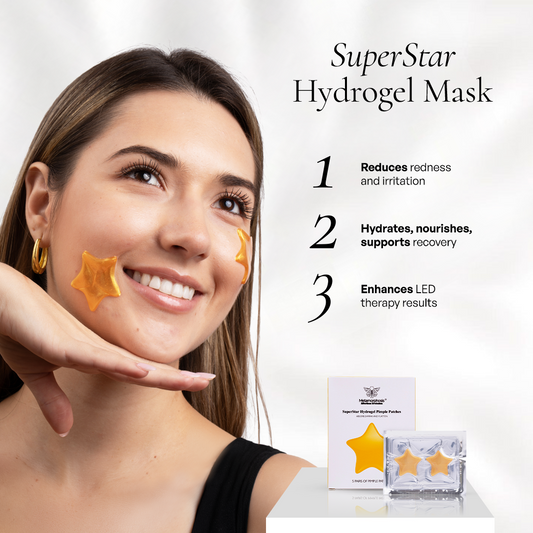
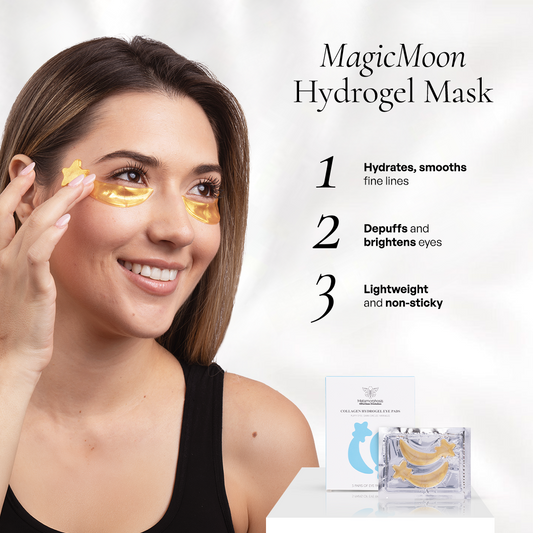
Not all hydrogel pimple patches are created equal either. The SuperStar Hydrogel Mask — developed in collaboration with a board-certified dermatologist — was formulated with a clinical ingredient profile that goes well beyond what standard patches contain.
Most acne hydrogel patches on the market rely on a basic combination of hydrocolloid, salicylic acid, and perhaps tea tree oil. The SuperStar Hydrogel Mask includes:
Centella Asiatica Extract — one of the most studied botanicals in dermatology for its role in wound healing, collagen synthesis, and anti-inflammatory activity. Particularly relevant for post-breakout skin recovery and barrier restoration.
Chondrus Crispus Powder (Irish Moss) — a marine-derived ingredient rich in polysaccharides that deeply hydrates, soothes sensitized skin, and supports the skin's natural moisture barrier — rarely seen in acne-focused formulations.
Hydrolyzed Collagen — supports skin elasticity and aids in the recovery of tissue disrupted by active breakouts, helping to minimize the appearance of post-blemish marks over time.
Polygonum Cuspidatum Root Extract — a natural source of Resveratrol with potent antioxidant and anti-inflammatory properties, providing additional support for skin stressed by acne and inflammation.
Niacinamide (B3) — regulates sebum production, strengthens the skin barrier, and visibly improves uneven tone associated with post-acne marks.
Salicylic Acid — a beta-hydroxy acid that penetrates pores to dissolve excess sebum and exfoliate the follicular lining, reducing the conditions that allow acne to form.
Tea Tree Oil — a well-documented antimicrobial botanical that conditions and soothes inflamed skin.
This is not a drugstore formulation. It is a dermatologist-developed ingredient system designed to treat active breakouts, support skin recovery, and address the full biological picture of acne — not just the visible surface.
How They Work Together: The SuperStar Protocol
The most effective approach to active breakouts combines both technologies in sequence.
Step 1: Use the SuperStar LED Pimple Patches for a three-minute treatment directly on the active blemish. The built-in timer guides the session automatically. Blue light targets bacterial activity. Red light begins modulating the inflammatory response.
Step 2: Follow immediately with the SuperStar Hydrogel Mask on the treated area. The dermatologist-formulated ingredient complex supports recovery, delivers deep hydration, and helps calm residual inflammation while the skin rebuilds.
Used together, these two products address acne at every level — bacterial, inflammatory, and recovery — in a protocol that takes less than 25 minutes total.
Clinical Results
The SuperStar Pimple Patches are not just clinically plausible — they are clinically evaluated.
Based on an independent 84-day clinical study with once daily use:
- 98% of participants observed an improvement in blemish appearance
- 87% reported healthier-looking skin with consistent use
These results reflect real-world use by real participants over nearly three months — not a self-assessment survey or a single-use trial.
Frequently Asked Questions: LED vs. Regular Pimple Patches
Are LED pimple patches better than regular pimple patches? They work differently and address different aspects of acne. Regular hydrocolloid patches absorb surface fluid and protect blemishes from external contact. LED pimple patches deliver clinically studied light wavelengths that target bacteria and inflammation beneath the skin's surface. For active, inflammatory breakouts, LED technology addresses the biological drivers that hydrocolloid cannot reach.
Do LED pimple patches actually work? Yes — when FDA-cleared and clinically evaluated. The SuperStar Pimple Patches by Metamorphosis Light Therapy are FDA 510(k)-cleared and backed by an independent 84-day clinical study showing 98% of participants observed improvement in blemish appearance.
Can I use LED pimple patches and hydrogel patches together? Yes — and this is the recommended protocol for SuperStar. Use the LED device first for the three-minute treatment, then apply the SuperStar Hydrogel Mask to support recovery and deliver active ingredients to the treated area.
How long does an LED pimple patch treatment take? Each SuperStar treatment session lasts three minutes. The built-in timer guides the session automatically — no settings, no guesswork.
Are LED pimple patches safe for sensitive skin? Yes. SuperStar delivers controlled LED light without heat, needles, or harsh chemicals. It is non-invasive and designed for safe, repeat use directly on active blemishes.
Metamorphosis doesn't follow beauty trends. It follows the science.
About the Author
Sally Gardocki, Esquire is the CEO and Founder of Metamorphosis Light Therapy, LLC — a Charleston, SC-based clinical beauty technology company built on photobiomodulation science. Metamorphosis devices are substantiated by independent 84-day biometric clinical studies and hold multiple FDA 510(k) clearances. Seven provisional utility patents were filed in 2026 covering the next generation of light-activated skincare science.